How Real Estate and Title Companies Should Securely Send Closing Documents and Wire Instructions
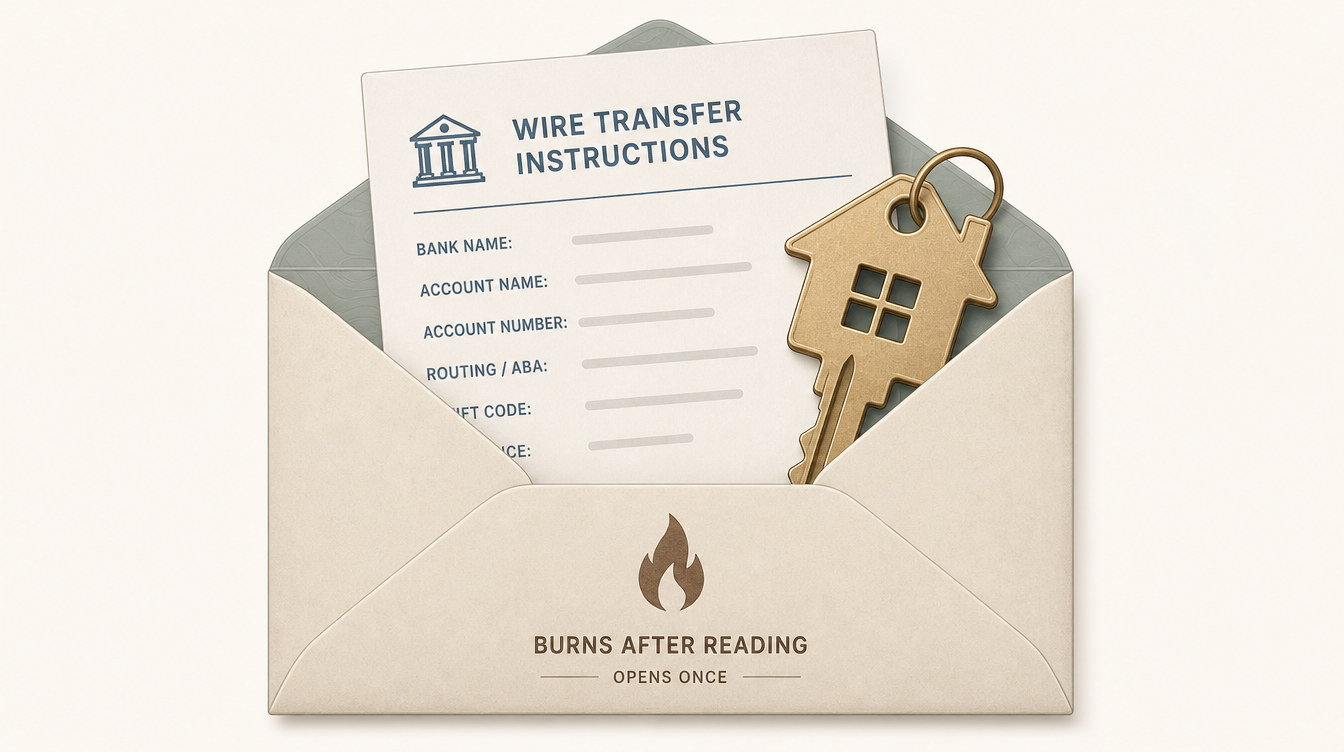
Send wire instructions as a one-time message that burns after the buyer reads it, never as an email attachment or a reply inside a shared thread, and pair that delivery with a verbal verification call to a phone number you already know is correct. One-time delivery plus a human voice check is the core defense against the wire fraud that targets closings. Every other closing document needs a secure path too, though they don't all need the same urgency or the same method.
Key takeaways
- Wire instructions are the single highest-value target in a closing. Verify them by phone using a number you already had on file, every time, even if the instructions look identical to the last ones.
- One-time delivery that expires after a single read keeps wire instructions out of forwarded email threads, where scammers most often intercept or substitute fraudulent details.
- Not every document needs that level of urgency. Pre-approval letters, purchase agreements and buyer financial documents can move through a secure upload or share link instead.
- The National Association of Realtors (NAR) and the FBI's Internet Crime Complaint Center (IC3) both say the same thing: confirm wiring instructions in person or by phone, never by email, and treat any last-minute "change" to account details as a red flag.
- Multi-office brokerages should standardize the verification script and keep a record of who verified what and when, so it never comes down to each agent's judgment.
What real estate and title companies need to collect and send
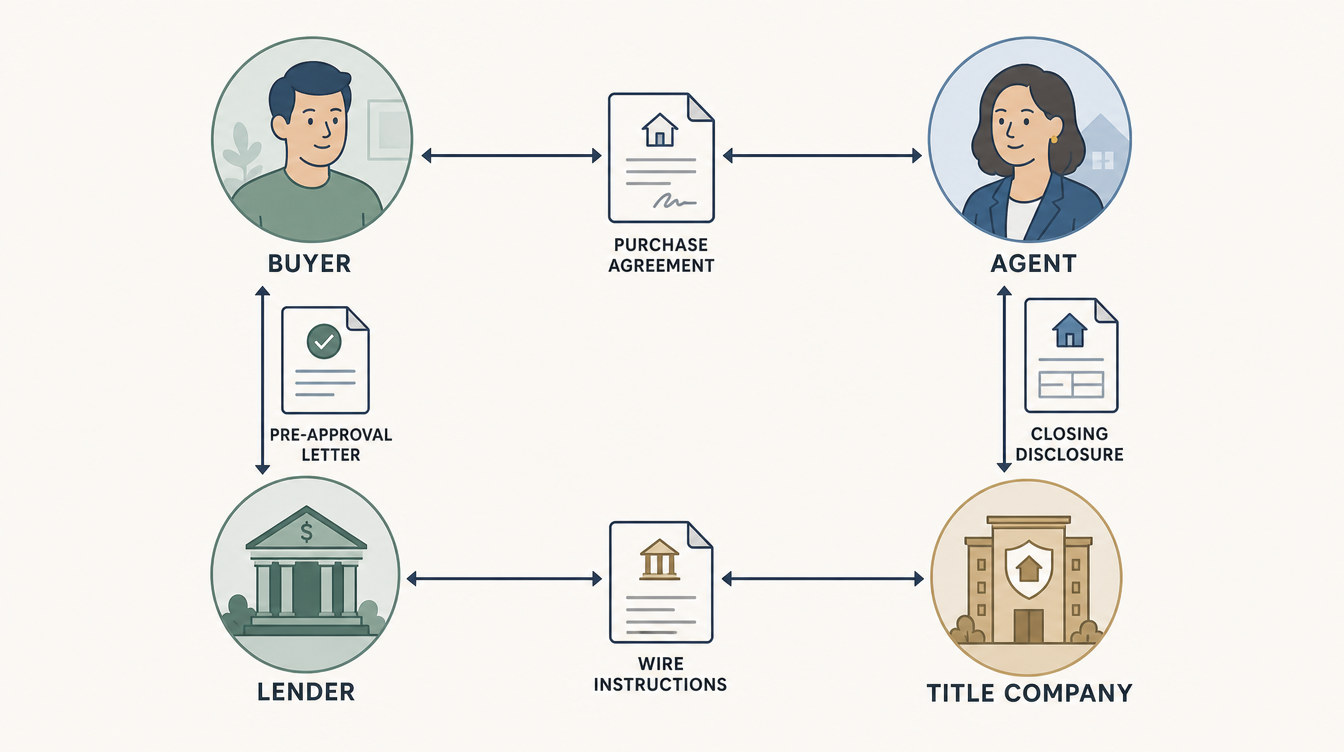
Closings involve a predictable stack of documents, and each one carries a different level of risk. The table below is a starting point for deciding how urgently a document needs one-time or encrypted handling versus a standard secure share.
| Document | Typical sensitivity | Recommended method |
|---|---|---|
| Pre-approval / pre-qualification letter | Buyer name, loan amount, sometimes partial financial detail | Secure share or upload link; verify authenticity if it arrives unsolicited, since NAR flags forged pre-approval letters as a known tactic |
| Closing Disclosure (CD) | Nonpublic personal information: income, account numbers, loan terms | Encrypted upload or one-time delivery (never a plain email attachment), especially given the tight, legally mandated delivery window |
| Wire instructions | Routing and account numbers, the actual fraud target | One-time, self-destructing delivery plus mandatory verbal verification via an independently obtained phone number. Never email. |
| Purchase agreement | Price, contingencies, personal terms | Secure share link or your transaction management platform |
| Loss payee letter / insurance binder | Policy numbers, property and financial detail | Secure upload or share link |
| Buyer-submitted financial documents (pay stubs, bank statements) | Full financial picture | Upload link into encrypted storage; avoid emailed attachments |
The rules that apply
The Closing Disclosure is governed by the Consumer Financial Protection Bureau's TILA-RESPA Integrated Disclosure (TRID) rule, which requires lenders to deliver it to the borrower at least three business days before closing, a requirement current as of October 2026 (CFPB TRID FAQs). That deadline is why CDs move under time pressure and are a predictable target late in a transaction.
Mortgage lenders fall under the FTC's Safeguards Rule (16 CFR Part 314), amended in 2023, which requires safeguarding nonpublic personal information. Title insurance companies and title agents are explicitly carved out of FTC enforcement under that rule; their data-protection obligations typically run through state insurance regulators instead, as confirmed in the American Land Title Association's summary of the amendment (ALTA, FTC Amends GLBA's Safeguards Rule). Real estate brokerages generally aren't "financial institutions" under this rule unless they arrange financing directly.
None of this is a security standard on its own. It's a backdrop that explains why documents move fast and under deadline pressure. NAR's guidance fills the practical gap: confirm wiring instructions in person or by phone, and never send financial information by email (NAR, Protecting Your Clients and Your Business From Fraud).
Step-by-step: verifying and sending wire instructions
- Get the wire instructions directly from the title or escrow company. Never take them from an email thread you didn't initiate. If instructions arrive unprompted or as a "change" to previous ones, treat that as a warning sign.
- Send the instructions as a one-time delivery that expires after a single read or a short time window, instead of a PDF attachment or a message left sitting in a shared inbox. A title or escrow office can send wire details as a one-time Spark through SparkVault (sparkvault.com) with no email attachment involved; a vendor-neutral alternative is to read the numbers aloud on a verified call and have the buyer write them down, so they're never transmitted digitally at all.
- Call the buyer using a phone number obtained independently of the email or document that carried the instructions: from a prior conversation, a business card, or the brokerage's own records, never a number listed in the message itself. The FBI specifically recommends this secondary-channel verification step (FBI IC3, Business Email Compromise: The $55 Billion Scam).
- Read the account and routing numbers back digit by digit on that call before any funds move, and confirm the receiving bank name matches what the buyer expects.
- Log the verification call (who called, what number, what was confirmed) in the file. If a compliance review or an errors-and-omissions (E&O) claim ever comes up, this record is what shows the step happened.
- If instructions change at any point, stop. Don't forward the update automatically. Verify again by phone before anyone sends money.
Buyer-submitted supporting documents, like pay stubs and bank statements, don't need the same one-time urgency but shouldn't sit in email either. A secure upload link into encrypted storage (what SparkVault calls a Vault) lets a buyer submit files directly without creating another email attachment for someone to intercept. A non-product alternative is a transaction management platform with built-in document upload, if the brokerage already uses one.
Client communication: what to tell buyers before closing
Buyers rarely know wire fraud is a risk until it's explained plainly, early, and in writing. A short note at the start of the transaction does more than a disclaimer buried in paperwork later.
"A note on wire instructions: we will never email you banking details for your closing funds, and we will never change them by email or text. You'll receive wire instructions through a secure, one-time link that only you can open, and we'll call you to confirm the account number before you send anything. If you ever receive wire instructions by email, even if they look like they're from us, call us at the number on this message before doing anything."
For larger brokerages and title companies
A single agent can follow the steps above with no special tools: a one-time link for the instructions and a phone call to verify. A multi-office brokerage or a title company handling dozens of closings a week needs the same steps applied consistently, with nothing left to individual habit.
- Standardize the script. Every office should use the same verification language and the same rule: confirm by phone, using an independently obtained number, before funds move.
- Limit who can send wire instructions. Role-based access means only escrow or closing staff (and not every agent) can originate or forward instructions.
- Keep an audit trail. A log of when instructions were sent, by what method, and who verified them by phone gives compliance and E&O reviewers something concrete to check.
- Review vendors with NAR's questions in mind. NAR suggests asking any title, escrow or closing partner how they verify identities and authority to act, how they communicate wire instructions and changes, and what safeguards apply to each payment option offered (NAR, Protecting Your Clients and Your Business From Fraud).
For teams that need a consistent place to send one-time instructions and collect buyer documents across offices, a one-time secure delivery link and an encrypted upload link give every office the same method, logged the same way. The same result is achievable without a dedicated tool if a brokerage enforces the phone-verification rule consistently and keeps its own written log.
Frequently asked questions
Is it ever safe to email wire instructions if the email is encrypted or sent through a secure portal link?
Encryption in transit doesn't address the main risk, which is that email threads get forwarded, compromised inboxes get monitored, and fraudulent "updated" instructions get slipped into a conversation. NAR's guidance is unqualified: don't send wiring instructions or financial information by email, and verify by phone instead (NAR, Wire Fraud).
What should a buyer do if they already wired money to the wrong account?
Contact the bank immediately to request a wire recall, then file a report with the FBI's Internet Crime Complaint Center (IC3) as soon as possible. The window to recover funds narrows quickly once money moves between banks. Also notify the title company and real estate agent involved so they can alert other parties in the transaction.
Who is liable if a buyer wires money based on fraudulent instructions a real estate agent forwarded?
Liability depends on the facts of the case and varies by state; NAR's own wire-fraud resources reference past case law where a licensee was found largely liable for forwarding fraudulent instructions without verifying them. General guidance can't settle this, so agents and brokers should talk to their broker and their E&O carrier about their specific exposure.
How do I verify a phone number is legitimate and not also spoofed?
Use a number you already had before this transaction started (from a prior closing, a business card, or the title company's published main line) and ignore any number in the email or text containing the wire instructions. If you're unsure, call the title company's main switchboard and ask to be transferred. Don't dial a direct extension provided in the suspicious message.
What's the difference between a one-time secure send and an upload link, and when do I use each?
A one-time send, like a Spark, is for something you're handing to someone else that should disappear after they read it once. Wire instructions are the clearest example. An upload link is for collecting documents from someone else, like a buyer submitting pay stubs or bank statements into encrypted storage. Use the first when you're the sender of a secret; use the second when you're the one receiving documents.
Should every office in a multi-office brokerage use the same wire-verification script?
Yes. A consistent script means every client hears the same warning and every closing leaves the same kind of record, which matters if a compliance review or dispute ever asks what was said and confirmed. Leaving the script to each agent's discretion creates gaps that fraud specifically exploits.
Sources
- NAR, Protecting Your Clients and Your Business From Fraud
- NAR, Wire Fraud
- FBI IC3, Business Email Compromise: The $55 Billion Scam (September 2024)
- CFPB, TILA-RESPA Integrated Disclosure FAQs
- FTC, Safeguards Rule (16 CFR Part 314)
- ALTA, FTC Amends GLBA's Safeguards Rule
Ready to stop sending wire instructions by email? Send it as a one-time Spark, free.